
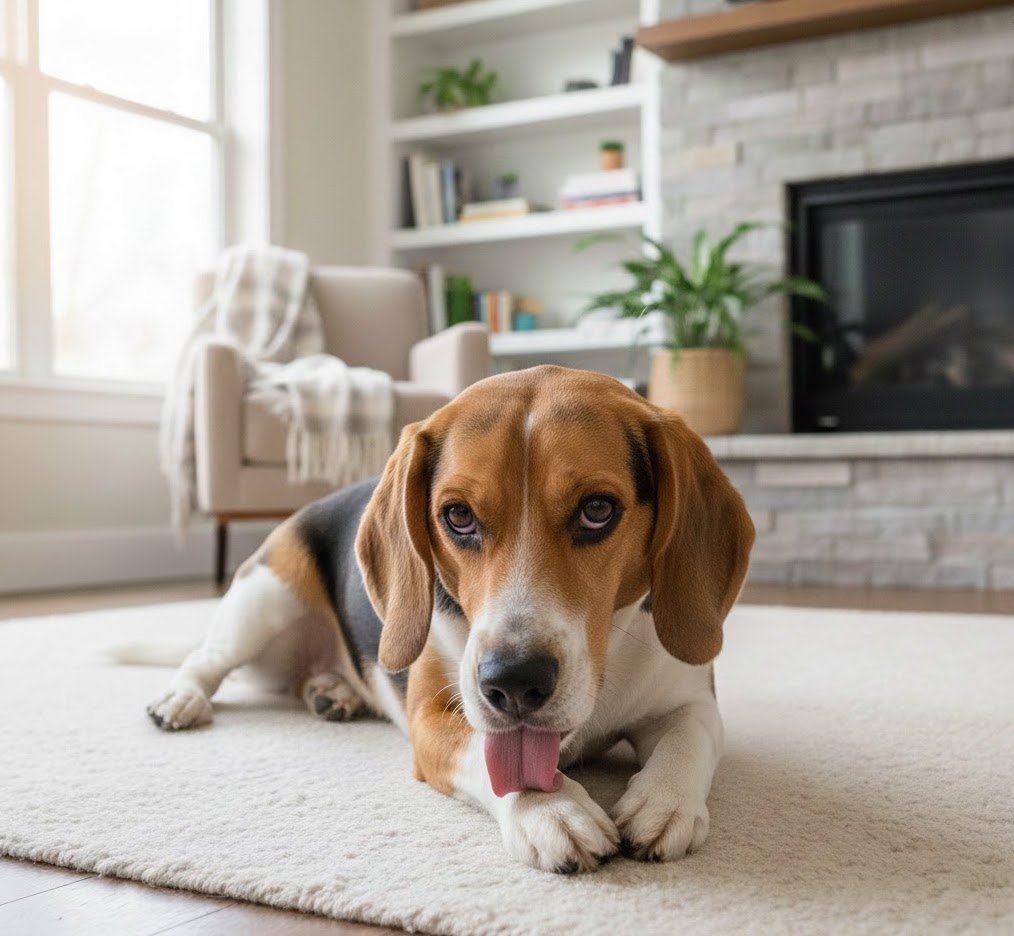
If you’ve ever glanced over at your dog and noticed them deeply focused on licking their paws — again — you’re not alone.
Paw licking can be harmless… or it can be your dog’s way of saying something is wrong.
So how do you tell the difference?
Let’s dive into the real reasons dogs lick their paws, when it’s normal, when it’s not, and what you can do to help your pup feel better.
🐶 Is Paw Licking Normal or a Problem?
Occasional paw licking is normal.
Dogs use licking as a way to:
- Clean dirt off their paws
- Soothe minor irritation
- Self-calm before resting
However, paw licking becomes a concern when it is:
- Frequent or obsessive
- Focused on one paw
- Causing redness, swelling, or hair loss
- Leading to sores or infections
At that point, licking isn’t grooming — it’s a symptom.
🚩 The Most Common Reasons Dogs Lick Their Paws
🌿 1. Environmental Allergies (Most Common Cause)
Environmental allergies are the #1 reason dogs lick their paws.
Common allergens include:
- Grass and pollen
- Mold spores
- Dust mites
- Lawn treatments
- Household cleaners
Dogs absorb allergens through their paws when they walk outside. The result? Itchy, irritated feet that feel better when licked.
Signs it’s allergies:
- Paw licking worsens after walks
- Seasonal flare-ups
- Red or inflamed paws
- Frequent ear infections
💡 Pro tip: Rinsing paws after walks can dramatically reduce irritation.
🍗 2. Food Sensitivities or Intolerances
Food sensitivities don’t always show up as stomach problems. Many dogs react through their skin and paws first.
Common triggers include:
- Chicken
- Beef
- Dairy
- Eggs
- Wheat or corn
Signs it’s food-related:
- Paw licking year-round (not seasonal)
- Chronic ear infections
- Itchy belly or face
- Loose stools or gas
Food trials under veterinary guidance can help identify the culprit.
😰 3. Anxiety, Stress, or Boredom
Licking releases endorphins — feel-good hormones — which makes it self-soothing for dogs.
Dogs may lick their paws when they feel:
- Anxious
- Bored
- Under-stimulated
- Lonely
This is especially common in dogs with separation anxiety or high intelligence breeds.
Signs it’s behavioral:
- Licking happens mostly when resting or alone
- No redness or physical irritation
- Occurs alongside pacing or whining
Mental enrichment can work wonders here.
🦠 4. Yeast or Bacterial Infections
If your dog’s paws smell like corn chips or Fritos, yeast may be the culprit.
Moist environments between paw pads allow yeast and bacteria to thrive.
Signs of infection:
- Strong odor
- Darkened skin between toes
- Swelling
- Pain when touched
These infections require veterinary treatment — licking will only make them worse.
🩹 5. Injury or Foreign Objects
Sometimes the reason is simple:
- A thorn
- A splinter
- A cut
- A cracked nail
Dogs may lick one specific paw excessively if something is stuck or painful.
Always check between the toes and pads if licking is sudden and focused.
🛑 When Paw Licking Becomes Dangerous
Chronic licking can lead to:
- Hot spots
- Open sores
- Secondary infections
- Thickened, damaged skin
Once the skin barrier breaks, healing becomes much harder — so early intervention is key.
🐕 How to Help Your Dog Stop Paw Licking
✔️ Clean Paws After Walks
Use a damp cloth or dog-safe wipes to remove allergens.
✔️ Dry Thoroughly
Moisture encourages yeast growth — always dry paws well.
✔️ Increase Mental Stimulation
Puzzle toys, scent games, and short training sessions reduce stress-based licking.
✔️ Use Vet-Approved Products
Avoid harsh chemicals or human creams without guidance.
✔️ See Your Vet When Needed
Persistent licking deserves professional attention — especially if sores or infections are present.
🐾 Can Paw Licking Ever Be Completely Normal?
Yes — and this part is important.
Dogs may lick their paws briefly:
- After eating
- Before sleeping
- During grooming routines
The key difference is intensity and frequency.
A relaxed lick here and there is normal. Obsessive, nonstop licking is not.
💛 Final Thoughts
Your dog’s paws are incredibly sensitive — and paw licking is often one of the first visible signs of discomfort.
Whether it’s allergies, stress, food sensitivities, or infection, paying attention early can save your dog from pain and long-term issues.
If your dog is licking their paws constantly, don’t ignore it — listen to what their paws are trying to tell you.
Your pup will thank you 🐶✨